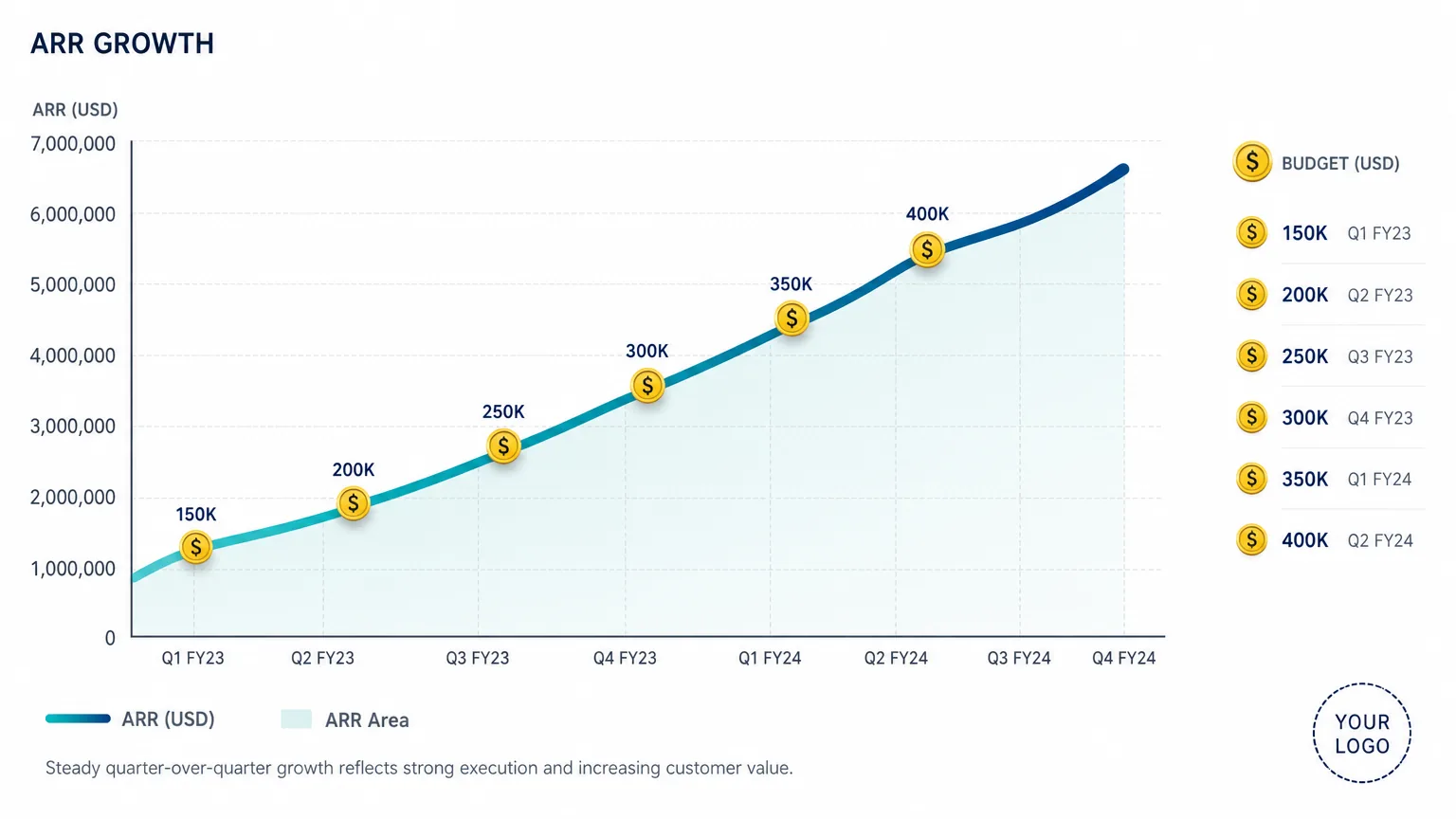
How did a seed-stage SaaS generate $120K ARR in 6 months with a $15K/month paid acquisition budget?
If you are a founder, marketing lead, or growth operator at a seed-stage B2B SaaS, you are probably wondering if paid acquisition can actually work for you. You have a tight budget and need clear, measurable ROI. We get it. Here is how we did it for one client in 2026.
What was the challenge?
Our client, an early-stage B2B SaaS, had a solid product but no prior paid acquisition strategy. They were pre-revenue, with less than $50K ARR. Their biggest challenge was proving product-market fit through paid channels without burning through their limited cash. They needed a predictable pipeline to hit their next funding milestone and impress investors.
Who was the client?
This client, a B2B SaaS in the HR tech space, offered a monthly subscription service priced at $250-$700 MRR per seat. At the start of our engagement, they had under $50K ARR and a small team with 0-2 full-time marketers. They had raised a seed round and needed to scale from 10 to 100 customers quickly.
Which channels did we use and why?
We focused on a multi-channel approach to capture different stages of buyer intent:
- Google Search (exact match, phrase match): This was our primary channel for high-intent searches. We targeted users actively looking for solutions to specific problems their product solved.
- LinkedIn Ads (single-image, text ads): LinkedIn allowed us to build credibility and reach decision-makers directly, focusing on specific job titles and company sizes.
- Meta (lead gen forms, retargeting): We used Meta for top-of-funnel awareness and, crucially, for efficient retargeting of website visitors and engaged audiences.
Google captured high-intent searches. LinkedIn built credibility with decision-makers. Meta drove top-of-funnel awareness and efficient retargeting.
What were the campaign budgets and timelines?
We started with a modest budget of $3,000/month in January 2026. Over six months, we strategically scaled to $15,000/month by June 2026, resulting in a total ad spend of $48,000.
- January: $3,000
- February: $5,000
- March: $8,000
- April: $10,000
- May: $12,000
- June: $15,000
Our budget allocation was roughly 40% to Google, 35% to LinkedIn, and 25% to Meta, adjusting based on performance.
What KPIs did we target and achieve?
We set clear, measurable KPIs from day one. Here is what we aimed for and what we hit:
- CPL (Cost per Lead): Target $45, Actual $38
- CAC (Customer Acquisition Cost): Target $1,200, Actual $980
- MQLs (Marketing Qualified Leads): 150 MQLs generated in 6 months
- ARR uplift: From $20K to $140K (a net $120K uplift)
- Conversion rates: MQL to SQL 25%, SQL to Customer 15%
- Return on Ad Spend (ROAS): 3.2x blended across channels
Which creative formats and messaging worked best?
We tested various creative formats and messaging to find what resonated most with our target audience.
- Search ads: Headlines like "[Problem] + [Solution]" and "[Competitor Name] Alternative" performed well. For example, "Streamline HR Onboarding with Our SaaS" or "Tired of X? Try Our Y."
- LinkedIn Ads: Single-image ads highlighting a specific pain point and its solution, along with direct text ads, drove strong engagement. LinkedIn InMail with a short case study snippet inside also had a high open rate.
- Meta Ads: Carousel ads showing "3 Pain Points Your HR Team Faces" followed by a clear solution performed strongly for awareness. Lead generation forms directly on Meta saw higher conversion rates than driving traffic to a landing page.
We found that video ads on LinkedIn outperformed static images by 40% in terms of click-through rate. A clear call to action like "Get your first 10 customers without wasting ad spend" or "See a 5-minute demo" always worked best.
What was the exact campaign structure?
Our campaign structure was designed for precision and optimization:
- Google Ads: We used three distinct campaigns: one for brand terms, one for competitor keywords, and one for problem-based keywords. This allowed us to control bids and messaging for different intent levels.
- LinkedIn Ads: We ran one Account-Based Marketing (ABM) campaign targeting specific companies and job titles, and one intent-based campaign using LinkedIn's interest and skill targeting.
- Meta Ads: Our Meta strategy included a dedicated retargeting campaign for website visitors and engaged social media users, and a lookalike audience campaign based on our existing customer list.
Our targeting focused on job titles like "Head of HR," "People Operations Manager," and "VP of Talent," with company sizes typically under 50 employees, specifically within the SaaS and tech industries.
What were the biggest learnings and optimizations?
Paid acquisition is an iterative process. Here are our key takeaways and how we optimized:
- We reduced CPL by 35% by shifting budget from broad match keywords to exact match and phrase match in Google Ads. Broad match initially generated volume but at a higher cost per qualified lead.
- LinkedIn lead generation forms consistently had a 2x higher conversion rate compared to driving traffic to external landing pages. The reduced friction made a big difference for B2B leads.
- Meta required a dedicated retargeting audience with tailored messaging to hit our CAC targets. Without it, top-of-funnel Meta campaigns struggled to convert efficiently for a B2B product.
- Consistent A/B testing of ad copy and visuals, particularly on LinkedIn and Meta, helped us continuously improve performance.
What were the final results, a summary table?
Here is a clear look at the impact of our paid acquisition efforts over six months:
| Metric | Before | After 6 months |
|---|---|---|
| Monthly spend | $0 | $15K |
| CPL | - | $38 |
| CAC | - | $980 |
| MQLs/month | 0 | 25 |
| Monthly ARR | $1.7K | $11.7K |
| Total ARR uplift | - | $120K |
What would we do differently next time?
Hindsight is 20/20. If we were to do this again, we would have started LinkedIn campaigns six weeks earlier to build pipeline faster. LinkedIn's B2B targeting is powerful but often has a longer lead time to generate consistent MQLs. We also would have explored Reddit for niche B2B audiences earlier, as it can be a cost-effective channel for specific industries. You can learn more about how to approach Reddit ads for B2B SaaS.
Ready to replicate this for your startup?
Results are specific to this client and industry. Your outcomes may vary based on product, market, and execution. If you are a seed-stage B2B SaaS looking to grow, book a free audit of your paid acquisition strategy to see how we can help you. We will tell you if we are a good fit, or what you should do instead.